
⏱ Estimated reading time: 2 min read
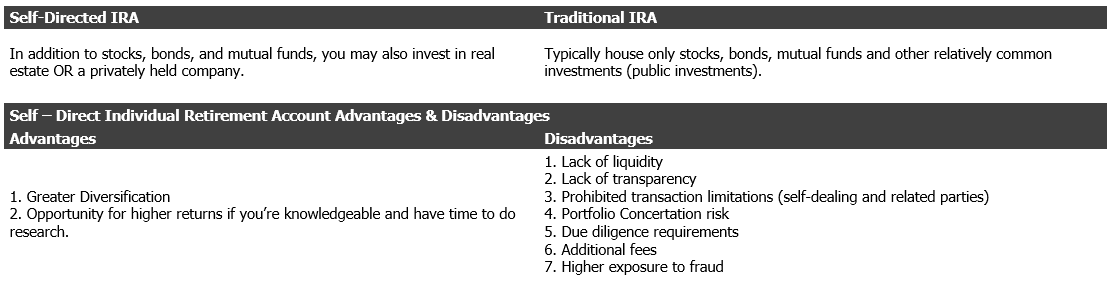
The difference between a self-directed IRAs and traditional IRAs is the optionality of investments you are permitted to own, such as real estate and privately held companies. Because you can invest in private investments, this adds to additional complexity which leads to most of the disadvantages noted in the table below.
How to open a SDIRA
Companies such as Fidelity, SoFi and E-Trade offer self-directed IRA services. However, do your research because you may want a custodian who has due diligence experience.
Conclusion
It’s important to note that SDIRA’s are not for everyone, instead a traditional IRA may be better depending on the knowledge of the individual. However, if you do choose the SDIRA route, you should budget time for additional diligence.
Disclaimer: The information provided herein is intended solely for informational purposes and no person(s) or other third-party may rely upon it as financial, tax, or legal advice or use it for any other purposes. As a result, Royal Financial, and any affiliates, assume no responsibility whatsoever to readers, or any other persons for that matter, as a result of the information contained herein.