
| Asset Class | Typical Historical Returns (30 yrs) | Liquidity | Tax Treatment (Typical) | Investor Fit | Time Horizon | Example Access |
|---|---|---|---|---|---|---|
| Private Equity | ~10–12% annually (wide variance) | Very low (7–10 yr lockup) | Mix of capital gains, interest, dividends | Accredited/high-net-worth investors | 7–10+ years | Private equity funds, feeder funds |
| Public Equity (Stocks) | ~9–10% annually | Very high (daily trading) | Dividends taxed annually; capital gains on sale | Growth-focused investors | 5+ years | Brokerage account (e.g., Vanguard, Fidelity) |
| Real Estate | ~8–9% annually (via REITs) | Low for direct property; high for REITs | Rental income taxed as ordinary; REIT dividends ordinary (20% deduction possible) | Income + diversification investors | 5+ years | REIT ETFs, crowdfunding, direct ownership |
| Fixed Income (Bonds) | ~4–5% annually | Moderate (Treasuries highly liquid) | Interest taxed as ordinary income; munis may be tax-exempt | Conservative / income-focused | 1–30 years | Bond ETFs, TreasuryDirect, brokerages |
| Commodities | ~2–3% annually (high volatility) | High for major futures/ETFs | Complex; futures (60/40 tax rule), metals taxed as collectibles (28%) | Diversifiers, inflation-hedge seekers | Short–medium term | ETFs (GLD, DBC), Interactive Brokers (futures) |
Source: Historical performance estimates compiled from S&P 500 Index, Cambridge Associates Private Equity Index, NAREIT, Bloomberg Barclays U.S. Aggregate Bond Index, and S&P GSCI Commodity Index (1993–2023).
Overview
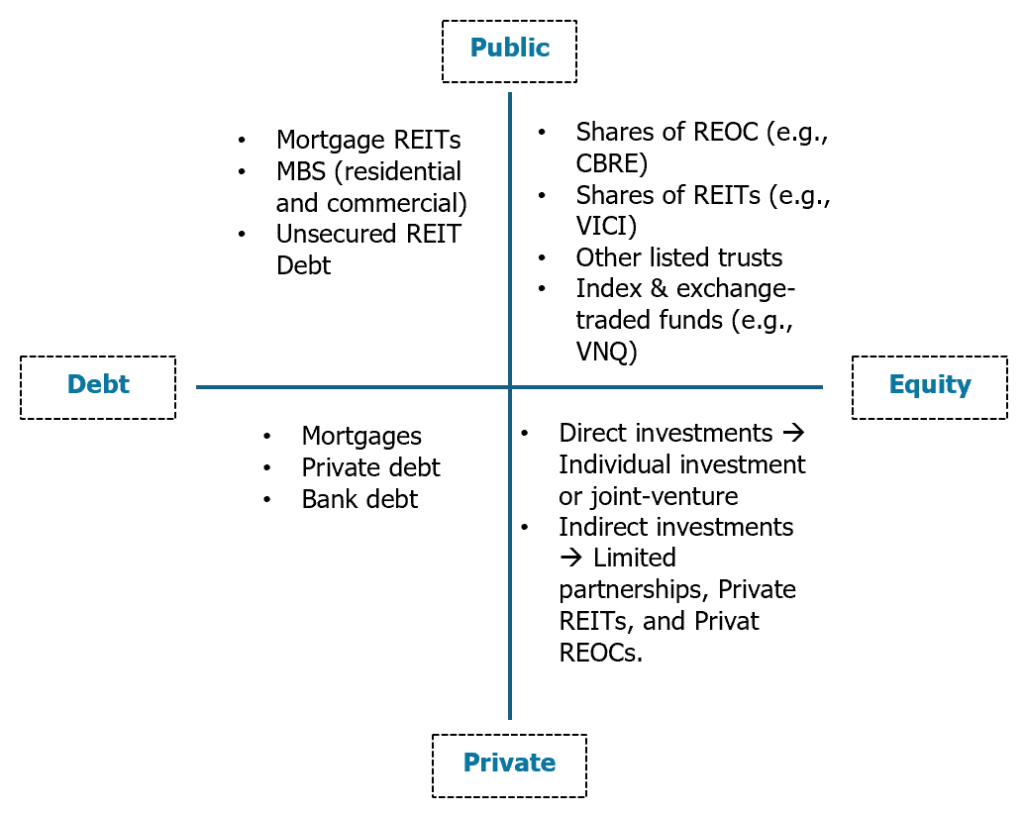
Real estate investing involves ownership or financing of physical property (residential, commercial, industrial, or land) or indirect exposure through publicly traded vehicles like Real Estate Investment Trusts (REITs). Investors benefit from rental income, property appreciation, and diversification.
How and Who Can Invest?
- Direct Ownership: Individuals can purchase rental properties, vacation homes, or commercial buildings. This requires significant capital, management responsibilities, and carries higher transaction costs.
- Public REITs & Real Estate ETFs: The easiest way for retail investors to gain exposure. REITs are companies that own and operate income-generating real estate, and their shares trade like stocks. Examples include Vanguard Real Estate ETF (VNQ) or large REITs such as Prologis (industrial) and Simon Property Group (retail).
- Private Real Estate Funds & Crowdfunding: Platforms like Fundrise, RealtyMogul, and CrowdStreet allow accredited (and sometimes non-accredited) investors to participate in private real estate deals with smaller minimums than traditional private equity real estate funds.
- Institutional Investors: Pension funds, endowments, and insurance companies often hold significant direct property portfolios or invest through private real estate partnerships.
Liquidity
- Direct property: Illiquid. Sales can take months and involve high transaction costs.
- Public REITs & ETFs: Highly liquid, trade daily like stocks.
- Private funds/crowdfunding: Semi-liquid at best; often multi-year commitments with limited exit options.
Tax Implications
- Rental Income: Taxed as ordinary income but offset by deductions (mortgage interest, depreciation, property taxes, operating expenses).
- Capital Gains: Taxed when property is sold, with potential for reduced rates if held long-term.
- 1031 Exchange: Allows deferral of capital gains taxes when proceeds are reinvested in another qualifying property.
- REIT Dividends: Usually taxed at ordinary income rates, though investors may qualify for a 20% deduction on REIT income under current U.S. tax law.
Historical Returns
Over the past 30 years, U.S. real estate (measured by public REIT indexes) has averaged 8–9% annual returns, comparable to equities but with different cycles and drivers. Direct property returns vary widely by market, sector, and leverage used.
Risks
- Market cycles (property values can fall during recessions)
- Vacancy and tenant risk
- Interest rate sensitivity (higher rates can reduce property values and REIT share prices)
- Illiquidity for direct ownership and private funds
Role in a Portfolio
Real estate provides income, diversification, and potential inflation protection. It tends to have lower correlation with equities and bonds, making it a strong complement in a balanced portfolio.
Investor Profile Fit
- Individuals seeking passive income and long-term appreciation
- Investors looking for inflation protection and diversification
- Not ideal for those needing short-term liquidity (unless investing in REITs)
Time Horizon
Best suited for long-term investors (5+ years) due to illiquidity and property market cycles.
Example
A first-time investor buys shares of a REIT ETF (like VNQ) in their brokerage account for diversified exposure to U.S. real estate. A more advanced investor purchases a rental property, generating monthly rental income and long-term appreciation.