
⏱ Estimated reading time: 2 min read
When M&A transactions occur, they typically trigger a purchase price allocation. Working in both Finance and Tax, you realize allocations can vary based on whether they are reported to stakeholders (financial/GAAP reporting) or federal, international, state, and local tax authorities (tax reporting).
In this post, we will discuss (1) the purpose of, and key differences between, GAAP and Tax reporting, and (2) what PPAs are and when you need to complete one.
(1) Purpose of Financial and Tax Reporting

Now that we have the basics down between GAAP and tax reporting, we can dive into what purchase price allocations are and the key differences we see between GAAP and Tax purchase price allocations (PPAs).
(2) What are Purchase Price Allocations (PPAs) and when do you need one?
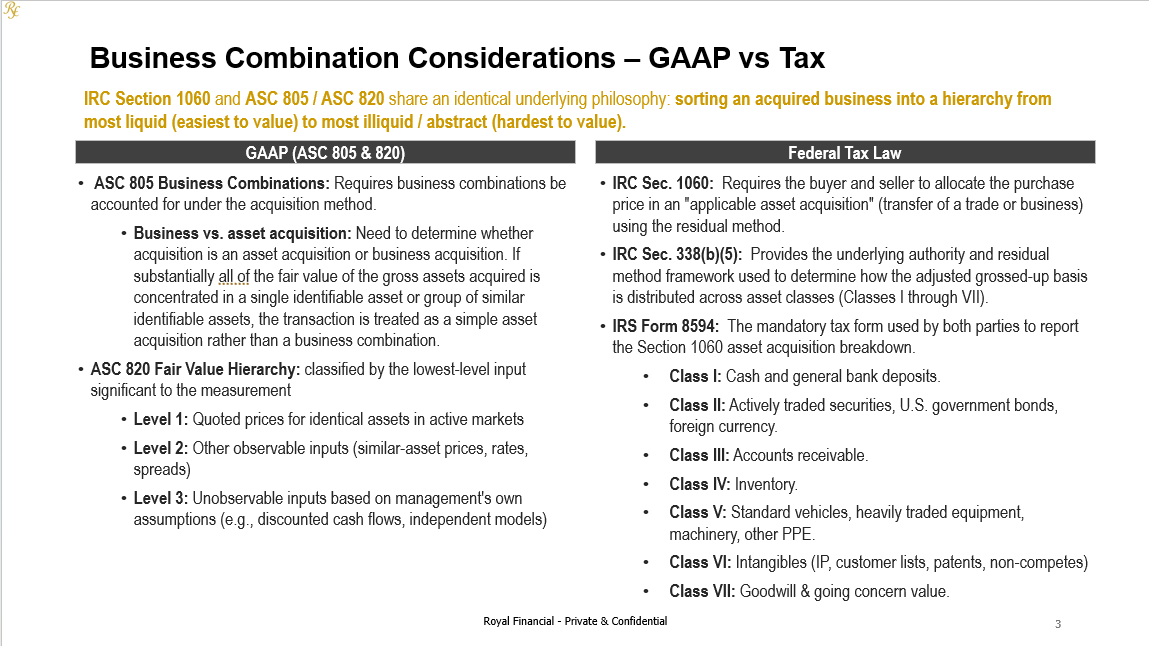
A PPA is the allocation of the purchase price paid to the respective assets and liabilities included in a transaction. The requirement to complete a PPA will be based on the agency you are reporting to, as depicted below.

Conclusion
Even though there are numerous similarities between GAAP and tax PPA accounting, the differences still leave real room for error — and that risk grows when two separate teams have to coordinate across the gap. Rather than stitching together separate groups, the cleaner path is a single trusted advisor who understands both the financial and tax side and can execute and coordinate across both, keeping costs down, improving consistency, and reducing the chance that something slips through the cracks.
Disclaimer: The information provided herein is intended solely for informational purposes and no person(s) or other third-party may rely upon it as financial, tax, or legal advice or use it for any other purposes. As a result, Royal Financial, and any affiliates, assume no responsibility whatsoever to readers, or any other persons for that matter, as a result of the information contained herein.