

⏱ Estimated reading time: 6 min read
A compelling deal is more than a headline price. A business can post attractive profits and still carry hidden cash flow pressure, a working-capital shortfall, or unresolved tax obligations that only surface once the transaction is underway.
Due diligence is the transaction-focused investigation that tests those assumptions before closing, pressure-testing the numbers behind the price and surfacing the risks and opportunities that should shape it.
This post covers two of those lenses: financial and tax due diligence (there are many other diligence streams). Financial due diligence (FDD) asks, “How sustainable are these numbers?” Tax due diligence (TDD) asks, “What tax exposures and implications come with this deal?” The answers feed directly into valuation, negotiations, deal structure, and post-close planning.
Before we dive into how FDD and TDD add value to an M&A transaction, it’s worth understanding where these workstreams fit in the overall process. Below is a visual of the general steps.
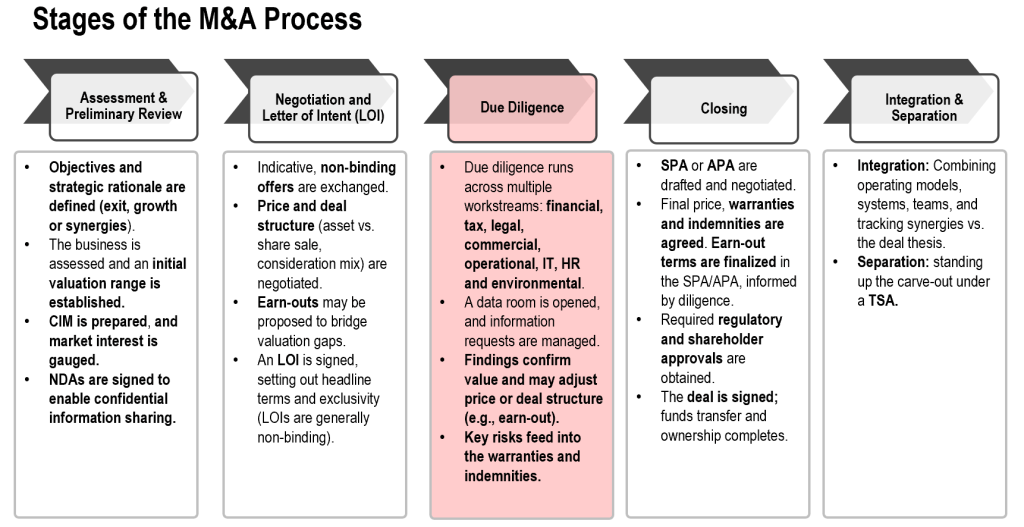
Due diligence generally takes place after the parties sign a letter of intent (LOI) and before they sign the definitive purchase agreement and close. Because an LOI is typically non-binding, what diligence uncovers can still change the final price and terms.
In some situations, diligence starts earlier. When the target is a public company, or when the seller commissions its own sell-side diligence, the work can begin before any LOI or negotiation.
Financial due diligence (FDD)
Purpose: FDD tests whether the target’s reported earnings, cash flow, and balance sheet hold up, and what it will really take to fund the business after close. The findings feed valuation assumptions, financing needs, purchase-price adjustments, and post-close cash planning.
FDD is not an audit. An audit expresses an opinion on whether financial statements are fairly presented under a reporting framework such as GAAP or IFRS. FDD is tailored to a single transaction and the questions that matter to it.
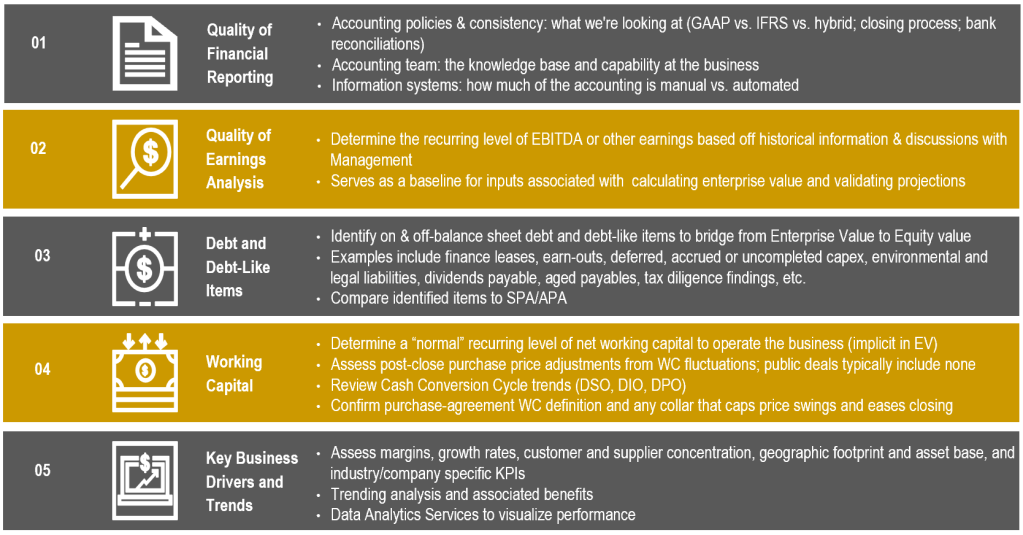
Scope of work typically includes:
- Quality of financial reporting
- Quality of earnings
- Working capital and the closing target
- Debt and debt-like items
- Revenue and margin trends, including customer and supplier concentration
- Cash flow and capital-expenditure needs
Tax due diligence (TDD)
Purpose: TDD identifies the tax exposures a buyer may inherit and the tax attributes that could add or subtract value. The findings feed valuation, purchase-price adjustments, risk allocation in the purchase agreement, deal structuring, and decisions about who owns post-close compliance.
Likewise, TDD is not a tax audit. An IRS or state examination tests whether a filed return complies with the law. TDD looks across the target’s tax profile to find the risks and opportunities relevant to the deal.
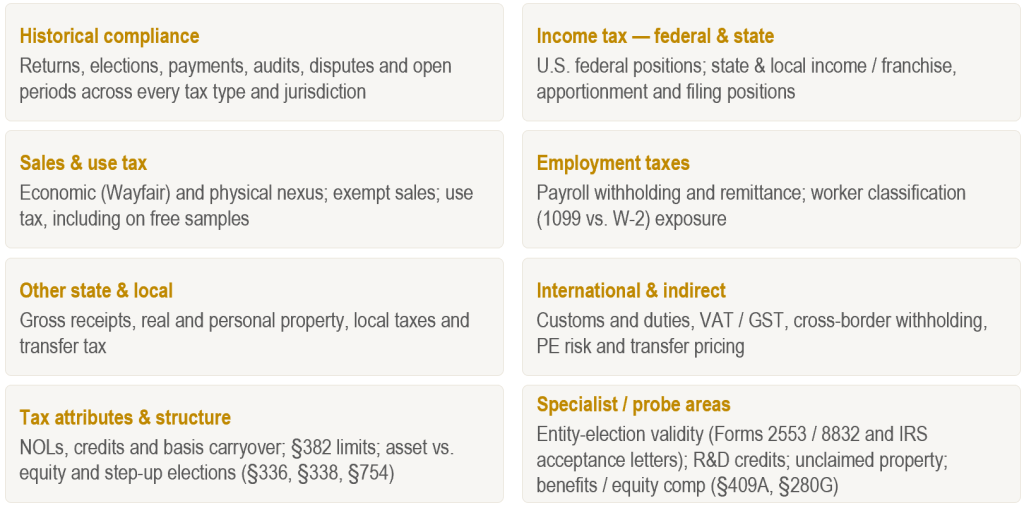
Scope of work typically includes, depending on the target:
- Historical compliance across the tax types and jurisdictions that matter for the business
- Federal and state income tax
- Sales and use tax, including where the target has nexus (enough presence in a state to owe tax)
- Employment taxes and worker classification
- International income and indirect taxes
- Tax attributes and deal structure, such as net operating losses (NOLs), §382 limits on using those losses after an ownership change, and step-up elections
- Specialist areas such as entity-election validity, R&D credits, unclaimed property, and equity compensation
Why both matter: complementary workstreams, not duplicated effort
The two workstreams answer different core questions. Financial diligence tests earnings, cash flow, and balance-sheet assumptions; tax diligence tests exposures and attributes, but they meet in the middle more often than people expect.
Tax accruals, unpaid obligations, and recurring tax costs feed straight into the cash flow, working-capital, and debt-like analyses that drive the bridge from enterprise value (the value of the business as a whole) to the equity price the buyer actually pays.
Consider a target that has been selling into several states without collecting sales tax. The TDD team quantifies the exposure; the FDD team determines how it affects the price. If one team treats the unpaid tax as part of working capital and the other treats it as a debt-like item, the same liability can be counted twice, or not at all, and the purchase price moves in the wrong direction.
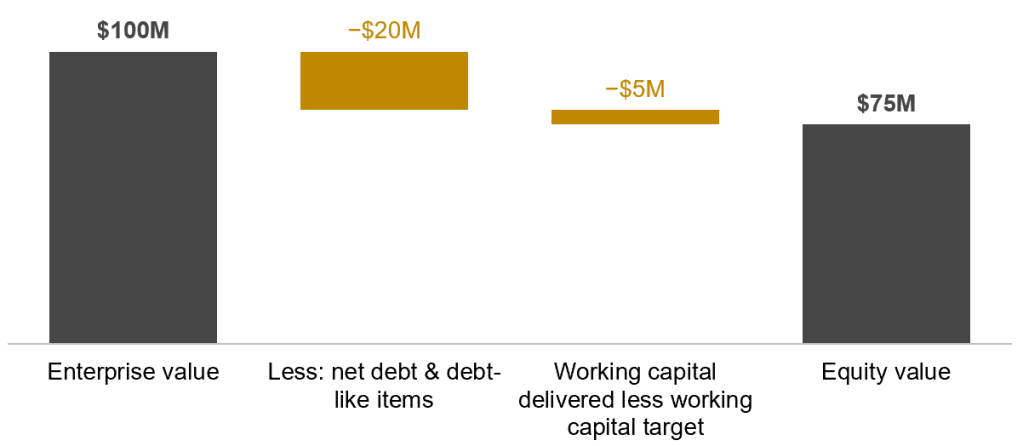
Combined, the findings give deal teams a sharper basis for valuation, closing adjustments, and contractual protections, such as indemnities or escrows, that address identified risks. Early visibility also supports better-informed negotiations, flags issues that need resolving before signing, and shapes the finance and tax priorities for the first months after close.
None of this is a guarantee. Diligence reduces uncertainty; it does not promise future performance, erase every liability, or stand in for legal, commercial, operational, and other specialist reviews.
Conclusion
Financial due diligence explains a business’s earning power and its cash requirements; tax due diligence explains its exposures and the attributes that come with it. Run together, they give dealmakers a more complete basis for judging price, terms, structure, and integration priorities, and a clearer picture of not just what they are buying, but what obligations come with it.
The practical next step is to scope diligence around the specific transaction, and to involve qualified financial, tax, and legal advisors early, while there is still room to act on what they find.
Because financial and tax diligence overlap so often, having an advisor who understands both disciplines is key. That combined perspective catches the issues that fall between the two workstreams, keeps the same exposure from being counted twice, and turns separate findings into one coherent view of price and risk.
If you have questions about how any of this applies to your transaction, contact us at merlynd.ameti@royalfinancial.co.
Disclaimer: The information provided herein is intended solely for informational purposes and no person(s) or other third-party may rely upon it as financial, tax, or legal advice or use it for any other purposes. As a result, Royal Financial, and any affiliates, assume no responsibility whatsoever to readers, or any other persons for that matter, as a result of the information contained herein.